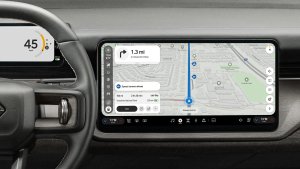
Rivian is preparing to turn its vehicles into "AI-defined" machines with the upcoming launch of its highly anticipated digital helper. A new look at the Rivian Assistant suggests that the wait is almost over, with the software expected to debut just as the company begins rolling out its R2 midsize SUV later this spring.
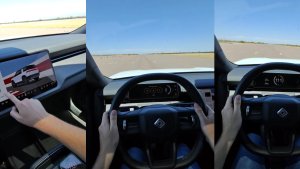
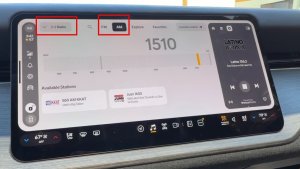
According to longtime Rivian watcher Chris Hilbert (@Hilbe), the assistant is likely to be a "game changer" for the brand. Hilbert shared a short clip of the assistant in action, showing a sleek UI that fits perfectly into Rivian’s existing operating system (video is further below, but there’s no audio). The prevailing theory is that the assistant will hit all Gen 1 and Gen 2 vehicles by the time the first R2 Performance units reach customers in late spring.
What is the Rivian Assistant?
First unveiled at Rivian’s Autonomy & AI Day last December, the Rivian Assistant is far more than just a basic voice command system. Rivian Chief Software Officer Wassym Bensaid described it as an "agentic framework" that connects your personal digital context — like your Google Calendar — directly into the car’s brain.
During a live demo, Bensaid showed how a driver can simply ask, "What's on my calendar today?" to get a list of events. But it goes deeper than that. The assistant can actually take actions, like moving a meeting to a later time or navigating to a location mentioned in an invite. "The assistant has memory, has context, it remembers the full story, who you're talking to, where you're going, and what you just searched for," Bensaid noted.
I think Rivian Assistant will be available to all vehicles by the time R2 deliveries begin. It has to be soon and is a game changer. pic.twitter.com/EgcRH1thQi
One of the coolest parts of the new assistant is how it handles vehicle settings. Instead of hunting through menus, you can use natural language. For example, if you say, "Can you make the seats toasty for everyone except me?" the car will intelligently warm up every seat besides the driver’s. It also understands context-sensitive commands like "switch to a more efficient drive mode," which triggers Conserve Mode without the driver needing to know the technical name.
Rivian is also finally bringing integrated messaging to its platform. The assistant can read incoming texts, suggest restaurants or shops near your destination based on those messages, and even reply with your current ETA. While the R2 will feature faster hardware to handle these AI tasks locally, Rivian has promised that existing owners won't be left behind.
Timing the Launch with R2
It makes perfect sense for Rivian to debut this software alongside the R2. The R2 is critical for Rivian’s survival, and having a "killer app" like a truly smart AI assistant helps differentiate it from the competition. While Rivian is also working on advanced self-driving tech for 2026, the assistant provides immediate value that owners can use every day.
As the R2 Performance prepares to ship later this spring, followed by the Premium variant later this year and the Standard trims through 2027, the Rivian Assistant will be the "digital face" of the brand. We’re expecting a massive OTA update to hit the fleet soon, finally bridging the gap between a software-defined vehicle and an AI-defined one.
Subscribe
Subscribe to our newsletter to stay up to date on the latest Rivian news, upcoming features and software updates.
As Rivian prepares for its biggest production ramp yet, the company is quietly building out the executive team needed to support a massive influx of new owners. A recent move to fill two high-level leadership positions signals that major updates are on the horizon for both Rivian Insurance and Rivian Care, the company’s in-house protection programs.
The expansion was first highlighted by Rivian enthusiast Chris Hilbert (@Hilbe), who shared a call for talent from Mike Slattery, Rivian’s Head of Insurance. Slattery’s announcement makes it clear that the company is looking to move beyond "business as usual" by leveraging its connected vehicle platform to rethink how insurance and warranties work.
Building a "High-Impact" Support Engine
The first of the two roles, the Sr. Program Operations Lead for Rivian Care, will serve as the "operational engine" behind the company’s vehicle protection products. This includes scaling high-impact programs like service contracts, windshield protection, and wheel and tire plans across multiple markets.
Currently, Rivian — whose name reflects a focus on the adventurous spirit of the Indian River — offers Rivian Care as a pilot program powered by Assurant. It is designed to protect vehicles like the R1T and R1S beyond their standard manufacturer’s warranty, covering critical components like the high-voltage battery and drivetrain. With a dedicated operations lead now joining the team, it’s likely that this pilot phase is nearing an end in favor of a more robust, permanent program.
The Future of Connected Insurance
The second position is an Insurance Agency Leader based on the ground at Rivian’s manufacturing hub in Bloomington/Normal, Illinois. Slattery noted that this leader will be tasked with driving profitability while keeping the owner experience central, all while "leveraging vehicle intelligence to fundamentally change how vehicle protection products actually work!"
Rivian Insurance is already a licensed agency available in all 50 U.S. states, but its potential is only just being tapped. Much like Tesla Insurance, which recently released its Safety Score 3.0 to further reward drivers who use the company’s Full Self-Driving (Supervised) system, Rivian is looking to use data-driven rates via its Driver+ system. By using the vehicle’s internal intelligence, Rivian can offer custom policies tailored to the exact risk profile of its drivers, making the transition from R1 to the mass market much smoother.
A mass-market vehicle brings a much broader audience, many of whom will expect first-party extended warranties and competitive insurance rates right out of the box. By scaling these leadership roles now, Rivian is ensuring it has the "operational engine" ready to handle tens of thousands of new R2 owners. This proactive hiring suggests that when the R2 configurator opens later this year, it will likely be accompanied by a more integrated and transparent suite of protection products than ever before.
Rivian is taking a major step toward closing the loop on battery life. The electric vehicle maker has officially announced a partnership with Redwood Materials to deploy a first-of-its-kind energy storage system at its Normal, Illinois, manufacturing facility. By repurposing more than 100 "second-life" battery packs from its vehicles, Rivian will create a 10 megawatt-hour (MWh) storage reservoir to help power the very plant where its cars are built.
This partnership is a massive win for sustainability. EV batteries are designed to be incredibly durable, often outlasting the vehicles themselves. Even when a pack is no longer ideal for high-performance driving, it still holds significant value for stationary storage. By utilizing these assets, Rivian is ensuring its environmental footprint remains as small as possible.
Repurposing for the R2 Ramp
The timing of this installation is particularly critical. Rivian’s Normal plant is currently gearing up for mass production of the R2, the company’s first affordable, mass-market SUV. After recently beating Q1 delivery estimates, the factory is under immense pressure to scale.
Rivian Wave
The new 10 MWh system will provide "dispatchable energy," meaning Rivian can pull power from these batteries during peak demand periods. This will not only lower energy costs for the company but also reduce the overall load on the local electrical grid, supporting reliability for the surrounding community.
“EVs represent a massive, distributed and highly competitive energy resource,” said Rivian Founder and CEO RJ Scaringe. “As energy needs grow, our grid needs to be flexible, secure, and affordable. Our partnership with Redwood enables us to utilize our vehicle’s batteries beyond the life of a vehicle and contribute to grid health and American competitiveness.”
Solving the Industrial Growth Constraint
The "secret sauce" behind this setup is Redwood’s proprietary Pack Manager technology. This system acts as a universal translator, allowing Redwood to communicate with and control different battery packs regardless of their original voltage or state of health.
JB Straubel, the founder and CEO of Redwood Materials (and former Tesla CTO), highlighted that the grid is currently struggling to keep up with the demands of modern manufacturing. “Electricity demand is accelerating faster than the grid can expand, posing a constraint on industrial growth,” Straubel said. “Our partnership with Rivian shows how EV battery packs can be turned into dispatchable energy resources, bringing new capacity online quickly, supporting critical manufacturing, and reducing strain on the grid without waiting years for new infrastructure. This is a scalable model for how we add meaningful energy capacity in the near term.”
A Scalable Model for the Future
This 10 MWh project is just the beginning. Redwood estimates that by 2030, the U.S. will need over 600 GWh of storage to stabilize the grid — a massive amount of energy equivalent to the Hoover Dam running for two months straight.
By turning old EV batteries into stationary assets before they are eventually recycled, companies can defer billions of dollars in costly infrastructure upgrades. As Rivian prepares to hand over the first R2 keys later this spring, its factory will be running on a smarter, more resilient energy loop that proves the "second life" of a battery is just as important as the first.