Rivian Continues to Convert RAN Chargers to NACS

By Nehal Malik
@RivianUpdates

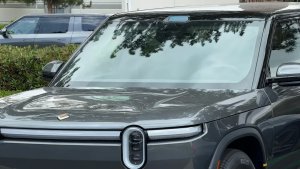
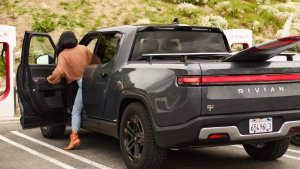
Rivian is making steady progress in its mission to unify the electric vehicle charging experience across North America. The company is actively retrofitting its proprietary DC fast-charging infrastructure, known as the Rivian Adventure Network (RAN), to replace aging CCS connectors with Tesla’s North American Charging Standard (NACS).

As pointed out by @AlejandroEV66, recent data shows that at least 23 Rivian Adventure Network sites — roughly 16% of the entire network — have now been retrofitted with NACS connectors. This means EV drivers with NACS ports can simply plug in without needing a bulky adapter. You can even track the progress yourself through a live list of NACS-equipped RAN sites to see which locations have made the switch.

The Shift to the North American Charging Standard

Rivian’s journey toward NACS began back in 2023 when the company officially joined the growing list of automakers adopting Tesla’s connector. At the time, Rivian Founder and CEO RJ Scaringe said, "We’re excited to work with Tesla and to see collaborations like this help advance the world toward carbon neutrality. The adoption of the North American Charging Standard will enable our existing and future customers to leverage Tesla’s expansive Supercharger network while we continue to build out our Rivian Adventure Network."

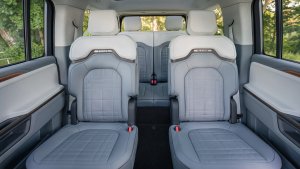
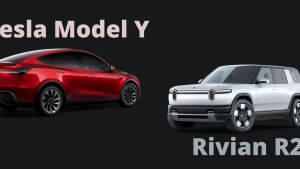
As part of this commitment, Rivian announced that all R1 vehicles from 2025 onwards would be equipped with native NACS ports. This transition also paved the way for the long-awaited R2 midsize SUV, which is built on a completely new platform and will feature a built-in NACS port when it launches later this month. The R2 is also expected to be a tech powerhouse, utilizing next-generation eSIM technology for constant connectivity.

Converting the Adventure Network

While Rivian owners have already gained access to Tesla’s massive Supercharger network, the company is still focused on its own branded charging experience. Reports from the field, such as those from @RivianUpdates, show that stations are being converted overnight. In one instance, a station that was entirely CCS1 one day had four of its fourteen stalls converted to NACS by the next.

@RivianUpdates

This retrofitting process is crucial for the company's future. By equipping its own stations with NACS, Rivian ensures that its newest vehicles — and those from other manufacturers like Ford or GM — can charge seamlessly. While the company is also exploring wireless charging to potentially eliminate ports altogether in the future, the immediate focus is clearly on standardizing the plug-in experience.

A More Convenient Future

Standardizing on NACS is a win for everyone. It reduces the "range anxiety" often felt by new EV owners and simplifies the hardware needed in the vehicle. As more RAN sites come online with the new connectors, the distinction between "Tesla charging" and "everyone else" will continue to fade.

Rivian is positioning itself as a leader in this transition, ensuring that whether you’re driving an original R1T or the upcoming R2, finding a fast, reliable charge is easier than ever.

Rivian R2 Launch Faces Setback as Storm Hits Factory

By Nehal Malik
Reddit: /u/jgilbs and /u/QuickChicken2000

Rivian’s momentum toward its most important launch ever has hit a major roadblock. Just as the company was ramping up production for the highly anticipated R2 midsize SUV, a severe storm system tore through Normal, Illinois, leaving significant damage at the manufacturing facility.

The news first broke on Reddit, where images appeared to show a caved-in roof at "Building 2" — the specific area of the plant dedicated to the R2 line. While the Midwest is no stranger to spring storms, the timing for Rivian couldn't be worse, as the facility was winding up for mass-market deliveries.

The R2 Launch Timeline at Risk

The R2 is fundamentally the "make or break" vehicle for Rivian. Before the storm hit, the company was on track to begin deliveries of the Performance Launch Package later this spring. Following that, a Premium trim was slated for late 2026, with the Standard Long Range and the "mythical" $45,000 Standard variant expected to follow in 2027.

This setback is especially painful because Rivian had recently beaten its Q1 delivery estimates, showing real operational strength. Now, however, it remains unknown exactly how much damage the storm caused or how it will shift the production calendar. Even if Rivian can shuffle its assembly processes to spare spaces elsewhere in the massive Normal facility, a caved-in roof suggests structural and equipment issues that can’t be fixed overnight.

Assessing the Potential Damage

While we wait for an official "all clear" from Rivian, the physical risks to a high-tech factory after a roof collapse are numerous. Beyond the obvious structural integrity questions, there is the threat of water damage to sensitive robotics and the risk of exposed electrical or gas lines.

Reddit: /u/QuickChicken2000

For a line that relies on advanced specifications and precise tuning, any moisture in the machinery can lead to long-term reliability problems if not addressed perfectly. It is a waiting game now to see if the Performance units scheduled for this spring will actually make it to customers' driveways on time.

A Momentary Pause in Progress

Rivian has proven itself to be resilient in the past, but the R2 is a high-volume play that requires every part of the factory to work in lockstep. This storm has introduced a new layer of execution risk just as the company was entering its most critical growth phase.

Whether this is a minor speed bump or a major delay will depend on what the inspectors find once they can safely enter Building 2. For the thousands of reservation holders waiting for their R2, all eyes are now on Normal, Illinois, as the company works to get its "Future of Adventure" back on the assembly line.

Rivian Preps for R2 With Big Insurance and Warranty Overhaul

By Nehal Malik
Rivian Wave

As Rivian prepares for its biggest production ramp yet, the company is quietly building out the executive team needed to support a massive influx of new owners. A recent move to fill two high-level leadership positions signals that major updates are on the horizon for both Rivian Insurance and Rivian Care, the company’s in-house protection programs.

The expansion was first highlighted by Rivian enthusiast Chris Hilbert (@Hilbe), who shared a call for talent from Mike Slattery, Rivian’s Head of Insurance. Slattery’s announcement makes it clear that the company is looking to move beyond "business as usual" by leveraging its connected vehicle platform to rethink how insurance and warranties work.

Building a "High-Impact" Support Engine

The first of the two roles, the Sr. Program Operations Lead for Rivian Care, will serve as the "operational engine" behind the company’s vehicle protection products. This includes scaling high-impact programs like service contracts, windshield protection, and wheel and tire plans across multiple markets.

Currently, Rivian — whose name reflects a focus on the adventurous spirit of the Indian River — offers Rivian Care as a pilot program powered by Assurant. It is designed to protect vehicles like the R1T and R1S beyond their standard manufacturer’s warranty, covering critical components like the high-voltage battery and drivetrain. With a dedicated operations lead now joining the team, it’s likely that this pilot phase is nearing an end in favor of a more robust, permanent program.

The Future of Connected Insurance

The second position is an Insurance Agency Leader based on the ground at Rivian’s manufacturing hub in Bloomington/Normal, Illinois. Slattery noted that this leader will be tasked with driving profitability while keeping the owner experience central, all while "leveraging vehicle intelligence to fundamentally change how vehicle protection products actually work!"

Rivian Insurance is already a licensed agency available in all 50 U.S. states, but its potential is only just being tapped. Much like Tesla Insurance, which recently released its Safety Score 3.0 to further reward drivers who use the company’s Full Self-Driving (Supervised) system, Rivian is looking to use data-driven rates via its Driver+ system. By using the vehicle’s internal intelligence, Rivian can offer custom policies tailored to the exact risk profile of its drivers, making the transition from R1 to the mass market much smoother.

Ramping Up for the R2 Era

This focus on internal infrastructure comes at a pivotal moment. Rivian recently beat Q1 delivery estimates and is now shifting its entire focus toward the R2 midsize SUV. The R2 is the company’s first truly mass-market offering, and deliveries are slated to begin with the Performance Launch Package later this spring.

A mass-market vehicle brings a much broader audience, many of whom will expect first-party extended warranties and competitive insurance rates right out of the box. By scaling these leadership roles now, Rivian is ensuring it has the "operational engine" ready to handle tens of thousands of new R2 owners. This proactive hiring suggests that when the R2 configurator opens later this year, it will likely be accompanied by a more integrated and transparent suite of protection products than ever before.

Latest Rivian Update