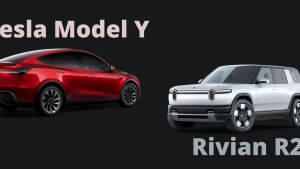
With Rivian R2 deliveries starting June 9th, early reservation holders are facing a major purchasing dilemma.
Rivian recently confirmed that the initial Launch Edition vehicles, as well as all units produced for approximately the first six months, will not be equipped with a LiDAR sensor array. Furthermore, Rivian has stated that no retrofits will be available for these early vehicles.
Given the substantial gap in autonomy capabilities between Gen 1 and Gen 2 R1 vehicles, many buyers are understandably nervous about taking delivery of an R2 with a major revision on the horizon.
To address these concerns, James Philbin, Rivian's Senior Vice President of Autonomy and AI, recently took to Reddit for an Ask Me Anything (AMA) session alongside Wassym Bensaid, Rivian’s Chief of Software. Together, the executives explained exactly what early R2 buyers can expect and whether waiting for LiDAR is actually necessary
The Gen 2 Hardware Reality


The root of the concern is hardware. The initial wave of R2s will roll off the line utilizing Rivian's Gen 2 autonomy hardware stack, which consists of 11 cameras and five radars. The future LiDAR-equipped vehicles are classified under the Gen 3 (RAP1) architecture.
However, Philbin was quick to reassure buyers that this hardware difference will not result in an immediate software bottleneck.
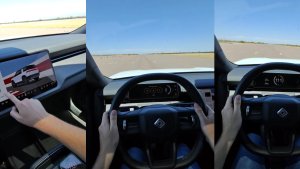
"Initial R2s run our Gen 2 autonomy hardware stack with 11 cameras and 5 radars, and yes, it will be fully capable of point-to-point hands-free assisted driving, exactly like a Gen 2 R1," Philbin confirmed.
He further noted that the Gen 2 and Gen 3 vehicles are architecturally similar, meaning the majority of feature development will be shared seamlessly between the two platforms.
The Case for Launch Edition
Beyond getting the vehicle months earlier, Rivian is offering a financial incentive for those who choose not to wait for LiDAR.
"Crucially, on R2 Performance with Launch Package, we are bundling Autonomy+ into the price of the vehicle for the lifetime of the car," Philbin noted.
Autonomy+ is Rivian's premium driver-assist software suite. By bundling this directly into the Launch Edition for the lifetime of the vehicle, early adopters are saving thousands of dollars on future software subscriptions. Philbin also confirmed that even without LiDAR, R2 "will be capable of point-to-point assisted hands-free driving when software is ready."
Furthermore, Philbin explained that early buyers will directly benefit from the future LiDAR vehicles on the road. The 3D ground-truth data gathered by Gen 3 vehicles will serve as training data, feeding directly into Rivian's Large Driving Model. This data flywheel will actively improve the capabilities of the Gen 2 fleet, allowing the cameras and radars to perform even better over time.
The Case for Patience
While the software parity will remain strong in the short term, Philbin did not shy away from the long-term reality of autonomous driving.
"We do not expect a noticeable difference between LiDAR and non-LiDAR vehicles for some time," Philbin noted. "Both Gen 3 (RAP1) and Gen 2 platform vehicles will have similar levels of capability at both the base and Autonomy+ levels for the next couple of years."
The key phrase here is "for the next couple of years." Eventually, the hardware limits of the Gen 2 stack will be reached. Philbin clarified that while LiDAR and non-LiDAR vehicles will share the same core feature set, the primary difference will be supervision. Over time, LiDAR-equipped vehicles will allow for "greater eyes-off support."
Our Final Verdict
The decision ultimately comes down to your personal timeline and expectations for autonomous driving.
If you want a highly capable, point-to-point hands-free driving assistant (where you still need to keep your eyes on the road), the Launch Edition (difference between trims) is incredibly compelling for its price point. Securing the Autonomy+ software suite for the lifetime of the vehicle makes it a fantastic value.
On the other hand, if what you’re seeking is a true eyes-off autonomy experience where you can safely read a book or watch a movie on the highway, waiting will be your best bet (Rivian’s autonomy roadmap). It seems that Rivian has no qualms with saying that the Gen 2 hardware will not reach that point. If you plan to keep the R2 for the better part of a decade and want the absolute peak of autonomous hardware, waiting until early 2027 for a Gen 3 build is the safer long-term play.
Follow Us on Google
Add Rivian Wave as a preferred source on Google to see more of our stories in Top Stories.
Add to Preferred Sources