New Details About Rivian's R2/R3 Steering Wheel: Dynamic Clicks & Haptic Feedback

By Rivian Wave Staff
Rivian

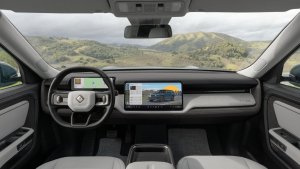
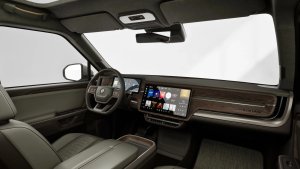
Rivian’s upcoming vehicles, including the R2 and R3X prototypes, will include a next-generation steering wheel that offers an innovative approach to driver control and feedback. We recently had a chance to chat with Marty L., UI/UX Director at Rivian, who shared exciting details about the new features and functionality of this wheel.

Three Axes of Freedom

The new steering wheel design looks great, with large, mostly exposed scroll wheels at either side of the steering wheel. However, the most interesting part of the wheel is the functionality it introduces. As expected, the steering wheel will have three axes of freedom, similar to the steering wheels in the current R1S/R1T models, but instead of requiring a separate button to navigate left and right, you’ll be able to tilt the scroll wheel left/right.

  • Tilt Left/Right: The ability to navigate left and right by tilting the scroll wheel

  • Push In: A push or press feature that can be used to confirm selections or switch modes.

  • Scroll Up/Down: Scroll up and down with dynamic haptic feedback

These scroll wheels are the cornerstone of changing the most used settings in the vehicle. However, Rivian plans to use them for more than just basic features. You’ll be able to adjust a variety of settings directly from the scroll wheels.

Dynamic Haptic Feedback

The biggest innovation with Rivian’s new steering wheel will be the ability for the wheel to provide dynamic haptic feedback as you’re scrolling. While most scroll wheels have a basic click sensation, Rivian’s will have adaptable feedback that changes depending on the function you’re adjusting:

  • Volume Control: When adjusting the vehicle’s volume, the haptic feedback (the “clicks”) will be more spaced out, with distinct, widely separated clicks corresponding to each volume level (e.g., 1 through 10).

  • ADAS Speed Adjustment: For adjusting speed settings, you’ll feel more closely spaced clicks that offer more precise control, giving a tactile sense of small incremental changes.

This feedback ensures drivers get a clear, physical confirmation of each adjustment, making it easier to make changes without taking their eyes off the road.

Rivian

Resistance for Added Control

The new steering wheel is beyond just clicks, Rivian’s scroll wheels will have varying levels of resistance. Marty explained that users will feel a slight resistance when they scroll up or down to change settings. For example, as you’re scrolling up to the next volume level or speed increment, the wheel will offer a subtle resistance before snapping into the next position. This makes the interaction feel natural and intuitive—almost like turning a dial that clicks into place.

Which Models Will Feature This Steering Wheel?

The steering wheel is currently featured in Rivian’s R2 and R3X prototypes, which have been showcased at various events. This innovative wheel will be rolled out to all R2 and R3 models. However, when asked whether the new wheel would make its way to the current R1S and R1T models, he simply responded with a “stay tuned,” hinting that Rivian may have plans to introduce it to its current lineup in the future.

This new steering wheel design is a testament to Rivian’s focus on technology, software, and innovation to produce some of the best EVs. As Rivian continues to redefine what’s possible in vehicle interiors, as they did with Dolby Atmos support, this new steering wheel will likely set the standard for user experience in future designs.
Rivian Patent Details New Pet-Friendly Features in Pet Comfort Mode

By Karan Singh
Rivian Wave

Rivian has always prided itself on building vehicles tailored for outdoor adventures, and those adventures typically include bringing along your pets. A newly published patent titled "Animal Interaction Based Vehicle Configuration" reveals that Rivian is developing an upgrade to its pet-friendly features. 

The highly detailed document outlines an ecosystem that goes far beyond basic climate control, introducing automated boarding, intelligent safety restraints, and even a digital leash.

Smart Collar Connection

The core of this new system relies on a digital tag embedded in a wearable device, such as a dog collar or harness. The vehicle continuously receives signals from this digital tag to determine the animal's exact location. By combining this tracking data with the owner's proximity, the vehicle can automatically anticipate when the pet is about to enter or exit the cabin and adjust its settings accordingly.

Automated Boarding and Suspension

One of the most practical features outlined in the patent is location-based suspension kneeling. If the vehicle detects an animal near the rear tailgate, it will automatically lower the rear air suspension to make it easier to jump inside. If the pet moves to a passenger door, the system adjusts that specific side of the vehicle. To further improve accessibility, the system can even automatically deploy steps, extend physical ramps, and open doors without any human input.

For now, the air suspension boarding system seems to focus on the R1 vehicles, which come with air suspension, rather than on the R2 or future R3. However, the majority of the patent applies to Rivian’s entire lineup.

Next-Gen Pet Comfort

While Rivian currently offers a basic Pet Comfort Mode, this patent details an evolution of the feature. The patent goes on to describe an upgraded system that uses internal sensors to monitor the animal's level of agitation and vital signs, including heart and respiratory rates; however, we’re not sure how likely these features are to actually reach production.

The patent describes detecting whether an animal is anxious or having trouble settling down, and automatically activating cabin noise cancellation to help block out exterior sounds. 

It gets even wilder, with the patent also noting that the vehicle can use its air suspension to simulate a gentle rocking motion to help calm the animal. Rivian even mentions the integration of an automated treat dispenser that can be triggered remotely by the owner.

Improving Safety for Animals

Rivian is also rethinking how the cabin protects its non-human occupants. When the vehicle detects that a pet has entered a specific seat or climate zone, it will automatically disable safety features that are dangerous to animals. This includes deactivating airbags, silencing seatbelt chimes, disabling seatbelt pre-tensioners, and locking the window switches in that specific zone.

Digital Fencing and Security

The patent extends well beyond the interior of the truck. When out at a campsite or park, the vehicle can project a digital fence utilizing the smart collar. If your pet wanders past a threshold distance from the vehicle, the collar can provide auditory, visual, or haptic feedback to guide the animal back. The system is highly dynamic and can actually scale the intensity of the feedback based on the animal's velocity. For example, a dog standing still outside the boundary might receive a low-volume chime, while a dog sprinting away would trigger a high-volume auditory alert.

Finally, the system integrates seamlessly with Rivian's security feature, Gear Guard. If the vehicle's microphones detect aggressive or defensive animal sounds, such as barking or growling, the security system will enter a heightened awareness mode. This automatically increases the sensitivity of exterior sensors and triggers the cameras to capture more frequent footage of whatever is disturbing your pet.

Rivian’s R2 EPA Certificate Reveal New Heat Pump and Battery Specs

By Karan Singh
Rivian Wave

Rivian fans have been eagerly awaiting official specifications for the upcoming R2, and a newly published EPA certification application appears to have finally delivered just that.

The comprehensive documents, filed by Rivian for the 2027 model year, provide our first detailed look at the R2's battery capacity, charging capabilities, motor output, and expected range. Here is a breakdown of the key takeaways from the R2's EPA filing.

Battery Capacity and NACS Charging

According to the filing, the R2 will feature an 86.8 kWh Large Pack battery. This is notably smaller than the packs in the flagship R1 vehicles, aligning perfectly with the R2's smaller footprint and more affordable price target. The battery pack weighs in at 541 kilograms (roughly 1,192 pounds) and operates at a nominal voltage of 353 volts.

When it comes to charging, the documents confirm that the R2 will natively feature a North American Charging Standard (NACS) port located on the rear driver's side of the vehicle. For home charging, the R2 supports an 11.5-kW onboard charger capable of drawing 48 amps on a 240-volt circuit. When out on the road, the SUV supports DC Fast Charging at up to 210 kW.

Dual-Motor Power and Impressive Weight

The certification documents specifically detail the Performance AWD dual-motor variant of the R2. This powertrain utilizes two AC Permanent Magnet motors: the front motor produces 219 kW, and the rear motor outputs 270 kW, resulting in a combined maximum output of 489 kW, or roughly 656 horsepower.

Perhaps the most impressive specification in the entire filing is the R2’s weight. The R2 Performance AWD equipped with 21-inch wheels has a curb weight of just 4,998 pounds. The model, equipped with 20-inch All-Terrain tires, weighs only slightly more, at 5,016 pounds. Keeping the curb weight under 5,000 pounds plays a huge role a big achievement for a dual-motor electric SUV and plays a huge role in the vehicle's overall efficiency.

The R2 comes in just 500lbs heavier than the Model Y Performance, 600lbs heavier than the ICE Porsche Macan GTS, and about 1,000lbs heavier than its closest hybrid equivalent, the Toyota RAV4, which is quite impressive for such a large and capable vehicle.

Range and Efficiency Estimates

While the EPA has not yet published the final consumer-facing range stickers, the raw testing data included in the filing gives us a very clear picture of what to expect.

R2 Performance AWD

Unadjusted City Range

Unadjusted Highway Range

Expected Combined Range (0.7 Derating)

21-Inch Wheels

487.4 miles (155.7 MPGe)

410.8 miles (131.2 MPGe)

~317 miles

20-Inch All-Terrain Tires

478.9 miles

392.1 miles

~308 miles

During the unadjusted urban driving cycles (UDDS), the R2 equipped with 21-inch wheels achieved a staggering 487.4 miles of range with an efficiency rating of 155.7 MPGe. On the unadjusted highway cycle, it achieved 410.8 miles at 131.2 MPGe. Applying the EPA's standard 0.7 derating factor to these unadjusted numbers results in an expected real-world combined range of approximately 317 miles for the 21-inch wheel configuration.

The 20-inch All-Terrain variant takes a slight efficiency hit due to the more aggressive tread pattern. In the same unadjusted tests, the All-Terrain model achieved 478.9 miles in the city and 392.1 miles on the highway. Applying the same derating factor puts the expected combined range for the All-Terrain model at roughly 308 miles.

A New Heat Pump

Finally, the documents reveal that the R2 will utilize a brand-new, proprietary heat pump design. Rivian notes that this new heat pump integrates valves, sensors, heat exchangers, and a refrigerant bottle into a single bundle to save weight and space. The filing explicitly states that this system will dramatically improve real-world range in cold weather environments compared to vehicles equipped with traditional heating systems.

Latest Rivian Update