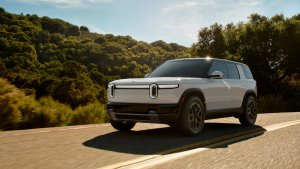
Rivian’s expansion into the broader world of transportation is accelerating through its micromobility spinoff, ALSO. On Tuesday, the startup announced a major multi-year commercial agreement with DoorDash to develop and deploy autonomous delivery vehicles at scale.
According to the announcement, the partnership coincides with a $200 million Series C funding round for ALSO, valuing the company at $1 billion and led by Greenoaks Capital with participation from DoorDash. This fresh capital brings ALSO’s total funding to approximately $505 million since it was spun out of Rivian in March 2025. As part of the deal, DoorDash Co-Founder Stanley Tang will join ALSO’s board as an observer.
Solving the Last-Mile Challenge
The partnership focuses on a specific pain point in logistics: the "last mile" of delivery. While ALSO’s previous deal with Amazon centered on human-operated e-cargo quads, this agreement is explicitly about autonomy. The goal is to create small, self-driving electric vehicles that can navigate the tricky intersection of roadways and bike lanes.
“Last-mile delivery is a physical-world challenge and the details matter, from curb access to making sure an order arrives on time and intact,” Tang said. He noted that ALSO is building "purpose-built EVs that are designed to unlock new ways to meet customers and merchants where they are."
ALSO’s current product lineup includes the TM-B, a Class 3 electric bike, and the TM-Q, a four-wheel pedal-assist quad. The commercial version of the TM-Q can carry over 400 pounds while still being able to fit in a bike lane, and it will likely serve as the foundation for these autonomous delivery robots. These vehicles leverage Rivian’s battery technology and software, allowing them to operate efficiently in dense urban environments where full-sized vans struggle.
Rivian’s Broader Ecosystem
The success of ALSO is a testament to Rivian’s strategy of spinning out its skunkworks projects into standalone companies. Apart from ALSO, Rivian also spun off Mind Robotics, which focuses on AI-powered industrial robots and recently secured $500 million in its own funding round.
Meanwhile, Rivian itself is focusing on its biggest launch yet: the R2 midsize SUV. The R2 platform is becoming a central pillar of Rivian’s business, as the company recently signed a $1.25 billion deal with Uber to build dedicated R2 robotaxis. By leveraging the same autonomy hardware and custom silicon across its consumer cars, delivery quads, and industrial robots, the Rivian ecosystem is becoming a massive player in the AI space.
As ALSO prepares to begin deliveries of its premium e-bikes this spring, the DoorDash deal ensures that its future in autonomous logistics is well-funded. We are quickly moving toward a world where your next food order might be dropped off by a vehicle born in a Rivian lab.
Subscribe
Subscribe to our newsletter to stay up to date on the latest Rivian news, upcoming features and software updates.
Rivian is getting ready to launch its most important vehicle to date, and as we get closer to the first deliveries, we are starting to see the clever design details that set the R2 apart. While most of the hype has been around its price and “Drop Glass” rear window, the vehicle's front trunk (frunk) is proving to be a standout feature for everyday usability.
According to automotive content creator JoshWest247, who recently got hands-on with the SUV at SXSW 2026, the frunk was a major focus for Rivian’s design team. Jeff Hammud, Rivian's chief designer, intentionally kept the front end a bit taller to maximize practical storage. "Whether you're a weekend warrior or you're out in the woods or just hauling stuff through the city, we've got a huge amount of additional storage space here," West noted in his deep dive.
Size and Capacity
Rivian’s goal for the R2 was to create a vehicle that can haul a family’s worth of gear without the massive footprint of the R1S. The company estimates that between the frunk and the rear cargo area, you can fit five suitcases, three backpacks, and a stroller.
Rivian Wave
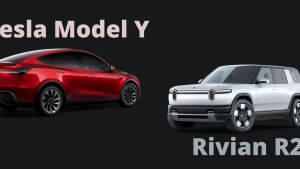
According to one of our sources at Rivian, the R2 frunk offers 5.2 cu-ft (147 liters) of capacity. For comparison, that’s much smaller than the R1S frunk (11.1 cu-ft), but larger than the frunk found on Tesla’s Model Y at 4.1 cu-ft (compare R2 to Model Y).
Based on those numbers, the rough dimensions of the storage tub are approximately 52" wide by 18" long and 12" deep. The shape is a clean, deep rectangle that makes it perfect for grocery bags or a standard carry-on suitcase.
Opening and Closing
Unlike the trunk, the R2 frunk isn't fully "powered" in the sense that a motor lifts and lowers it like a garage door, but it feels remarkably close. It uses a power release system — you simply press a capacitive button marked with three lines on the outside of the vehicle to unlatch it, and the hood lifts open automatically. This allows you to drop your bags inside even when your hands are mostly full. There’s also an emergency open button on the inside of the frunk for safety.
Rivian Wave
For closing, Rivian has implemented a soft-close mechanism. You can lower the hood (even with a single finger) until it reaches the latch; at that point, the car takes over and "sucks" the hood down to a secure seal. You can also open the frunk remotely via the Rivian mobile app or through a button on the internal screen.
Rivian could eventually also add a hands-free "auto-open" feature for the frunk and trunk using Ultra-Wideband (UWB) technology, similar to what Tesla offers. This would allow the frunk to pop open automatically as you approach with your phone in your pocket, making the space even more convenient.
Evolution from Prototype to Production
Comparing the production-intent design to the early prototype we saw back in 2024 reveals some smart refinements. One of the most obvious changes is the windshield washer fluid fill, which has been moved from the rear of the bay to the very front passenger side. This ensures you don't have to lean over a potentially dirty car to top up your fluids.
The frunk on an R2 prototype from 2024
Rivian Wave
Rivian also cleaned up the interior aesthetic by removing the embossed logo from the topside inner lining and adding a replaceable protective material. This liner acts as a buffer, preventing cargo from scuffing the hood when it vibrates against the inside of the frunk during off-road adventures.
A Truncated Timeline for the R2 Family
Rivian is currently preparing for a phased rollout of the R2, and the good news is that this well-designed frunk should be standard across the entire lineup. The journey begins later this spring with the R2 Performance. This $57,990 flagship features dual-motor AWD, a 3.6-second 0–60 mph time, and an exclusive Launch Package for early reservation holders.
Rivian Wave
The rest of the family will follow through 2027:
R2 Premium ($53,990): Arriving late 2026.
R2 Standard Long Range ($48,490): Expected in early 2027 with a lineup-defining 345-mile range.
R2 Standard ($45,000): The base model, anticipated for late 2027.
The R2 launch is critical for Rivian’s bottom line as it moves toward the mass market. By focusing on practical features like a hands-free opening frunk and easy-access washer fluid reservoirs, the company is making a strong case for itself against established competitors.
If you want to see the frunk in person, Rivian is taking the R2 on a nationwide tour with "Block Party" events in cities like Venice, Denver, and Chicago. It is a great opportunity to see if this "new standard" for storage lives up to the hype before the first Performance units hit the driveway this spring.
Rivian has officially broken through one of the oldest barriers in the automotive industry. After a multi-year standoff, the electric vehicle maker — alongside rival Lucid — can now sell its cars directly to consumers in Washington state.
According to a report from The Wall Street Journal, the victory came after Rivian threatened to take the issue directly to voters via a ballot measure. Faced with the prospect of a public vote that would likely favor consumers, the state’s powerful dealer lobby "blinked" and dropped its opposition, even encouraging lawmakers to approve the new measure.
Following the Tesla Precedent
For decades, most U.S. states have relied on franchise laws that require new cars to be sold through independent, third-party dealerships. However, a 2014 grandfathered exemption in Washington state law created a unique loophole that allowed Tesla to bypass these rules and sell directly to consumers.
At the time, the special provision was granted specifically because Tesla was the only electric-only automaker seeking to enter the market. By successfully piggybacking on this legal precedent, Rivian and Lucid have effectively ended Tesla's "exclusive" status, proving that the same rules can now apply to the next generation of EV startups.
The change was not welcomed by everyone. Traditional giants like Ford, General Motors, and Toyota lobbied against the move, arguing it creates an unfair playing field. However, Rivian CEO RJ Scaringe has remained committed to this model, arguing that direct sales are more profitable and allow the company to control the entire customer experience — from marketing to maintenance.
With more affordable R2 variants like the $45,000 Standard model arriving through 2027, Rivian needs to be able to sell to as many people as possible without the added complexity of a dealership network. Washington is a huge market for EVs, and being able to finalize a sale in person rather than forcing customers to "order online" while standing in a showroom is a massive advantage.
What This Means for Other States
Rivian isn't stopping at the Pacific Northwest. Following this win, the company is eyeing other states that allow ballot initiatives, including Ohio, Oklahoma, and Arkansas. If the "threat of a vote" strategy worked in Washington, it could become the blueprint for dismantling direct-sales bans across the country.
“The writing was on the wall” for dealers, noted Republican state lawmaker Andrew Barkis. While the current law specifically protects local family businesses by barring future entrants from using the same loophole, the door is now open for Rivian to scale its operations just in time for its biggest launch yet.