Rivian R1T Earns IIHS Top Safety Pick+ Award – The Only Truck to Achieve It [VIDEO]

By Karan Singh
Rivian Wave

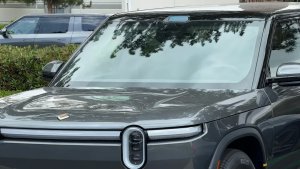
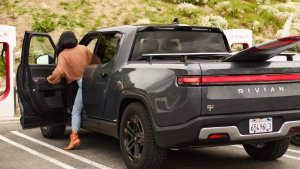
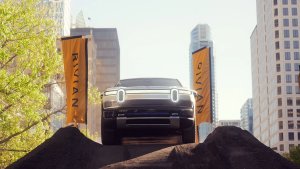
Rivian’s 2024 R1T is the only EV to earn the Top Safety Pick+ rating in the pickup truck category. This is a significant achievement, as the Top Safety Pick+ rating is awarded to the safest of the vehicles.

IIHS is the Insurance Institute for Highway Safety, which is an independent non-profit that tests vehicles with the goal of reducing accident-related deaths. They provide safety ratings to a wide range of vehicles. IIHS tests for crashworthiness – how well a vehicle protects occupants in a crash, as well as crash avoidance and mitigation – the technology on board to prevent a crash, or reduce its severity.

Top Safety Pick+

The criteria for earning a Top Safety Pick+ is challenging. It requires “Good” ratings in 2 of the tested categories – the small overlap front test and the updated side test. It also requires Acceptable or Good ratings in the updated moderate overlap front test, headlights standard, and pedestrian front crash prevention test. A “Good” rating is IIHS’ highest rating, with the ratings below it being, Acceptable, Marginal and Poor being the lowest rating.

The R1T achieved a Good rating in every category, except the Front Crash Prevention for Pedestrians, where it achieved an Acceptable grade. Other than a few small outliers, the R1T achieved the best ratings of any pickup truck tested.

IIHS

Improving Ratings

Rivian’s next target for improving the R1T’s safety will likely be to hone in and focus on software for forward collision avoidance to better keep pedestrians safe. Rivian has already included a new computer, as well as a new MobilEye package on their Gen 2 vehicles, so an improved rating will likely be a matter of waiting for Rivian to gather data and train their software to better identify what is in front of the vehicle.

As Rivian continues to improve their tech, we can only expect that they’ll be picking up this award year after year. Rivian has won the award on the R1T in 2022, 2023, and now in 2024.

The other contenders for the Top Safety Pick in the pickup truck category for 2024 included the Toyota Tundra 2024 crew cab, and the Tundra once again – in its extended cab model. Both scored fairly highly, but the extended cab scored much better for rear passenger safety, unsurprisingly. What’s key here is that the R1T handily beat them both in safety across the board.

Most interestingly, the R1T is the first pickup truck to achieve the Top Safety Pick+ award and the only one of the 31 vehicles that was tested by IIHS to achieve such fantastic results. Rivian is clearly putting safety high on their list of priorities, and we’re happy to see the R1T be the truck that achieves such positive results for the first time.
Rivian Hid a Tiny Easter Egg Inside the R2's Taillight

By Nehal Malik
@douglasizzo

Rivian’s R2 is quickly becoming the ultimate scavenger hunt for electric vehicle enthusiasts. As the company prepares for its first deliveries later this spring, fans are uncovering a series of hidden design details — or easter eggs — that show just how much personality the R2 design team has baked into the SUV.

The latest discovery comes from an R2 Block Party event in Venice, California. A video shared by Douglas Izzo (@douglasizzo) on X reveals a tiny vehicle silhouette etched directly into the driver’s side corner of the taillight. The hidden graphic features a small outline of the R2 itself right next to a miniature Rivian logo. Interestingly, the detail is exclusive to the driver’s side, leaving the passenger side taillight clean. Izzo noted that the secret was pointed out to him by Jack, a member of the R2 design team.

A Growing List of R2 Secrets

This isn't the first time Rivian has hidden fun details in its mass-market SUV. Last month at SXSW 2026, we saw a solvable maze printed on the inside of the charging port door. Other eagle-eyed fans have spotted a Gear Guard Gary decal on the windshield frit band and a small rock climber graphic tucked away on one of the rear windows.

@Parag_Jain_EV

These details might seem minor, but they go a long way in building brand loyalty. It shows that Rivian isn't just focused on utility; they want the car to feel special to the people who buy it. Rivian is currently taking the R2 on a cross-country viewing trip, giving reservation holders and fans plenty of chances to hunt for even more secrets before the order configurator officially opens.

Delivery Timeline and Trims

As fans enjoy these easter eggs, the real excitement is the approaching delivery timeline. The R2 Performance trim, starting at $57,990, will be the first model off the production line. This dual-motor AWD flagship offers a 3.6-second 0–60 mph time and 330 miles of range.

@douglasizzo

The rest of the R2 variants will follow shortly after:

  • R2 Premium ($53,990): Expected late 2026.

  • R2 Standard Long Range ($48,490): Slated for early 2027.

  • R2 Standard ($45,000): The base model is currently expected in late 2027.

The R2 is a massive play for Rivian, designed to bring its "electric adventure" brand to a much wider audience. By including these quirky design touches, Rivian is making sure the R2 stands out in a crowded market filled with more sterile competitors.

Whether it's a maze in the charge port or a silhouette in the taillight, these details make the R2 feel like it was designed by people who actually love cars. As the R2 makes its way through more cities over the coming weeks, it's likely that we haven't seen the last of these hidden gems.

Rivian’s Latest Patents Reveal Smarter RAN Chargers

By Karan Singh
Rivian Wave

Rivian is continuing to iterate on its Rivian Adventure Network (RAN) hardware, and two recently published patents reveal some incredibly clever engineering happening behind the scenes. From surviving extreme weather to creating a more aesthetically pleasing charging experience, these documents show that Rivian is rethinking both the hardware efficiency and the user experience of public charging.

Self-Heating Chargers without the Heaters

The first patent, titled "Systems and Methods for Heating an Electric Charger for Electric Vehicle" (US12592646 B2), addresses the harsh realities of outdoor infrastructure. Chargers placed in extreme environments face freezing temperatures and high humidity, which can easily lead to damaging internal condensation and component failure.

Instead of adding bulky, expensive, and inefficient dedicated heating elements to the cabinets, Rivian engineers have developed a way to use the existing internal hardware to keep things warm. The power cabinets utilize Dual Active Bridge (DAB) DC-DC converters to manage the flow of electricity to your vehicle. 

When internal sensors detect that the ambient temperature has dropped below a specific threshold, such as -20 degrees Celsius, or if relative humidity rises above 90 percent, the system can automatically trigger a dedicated heat generation mode.

In this mode, the control circuitry intentionally operates the converters inefficiently to create controlled electrical losses. By creating a shorted output on the secondary side bridge, or by circulating current between bidirectional converters while the system is in a no-load state, the hardware generates heat. 

These electrical losses naturally radiate thermal energy, warming the inside of the cabinet and driving out moisture. Once the environmental conditions return to safe operational levels, the system exits the heat generation mode and resumes standard functionality.

Synchronized Charging

The second patent, titled "Synchronized Lighting for Electric Vehicles" (US12583382 B2), focuses purely on the visual experience of a busy charging hub. The patent text notes that when multiple electric vehicles are plugged in at a single location, their independent charging status lights naturally blink at different intervals. Rivian describes this uncoordinated flashing as a problematic and chaotic "cacophony of light".

Rivian's clever solution is to synchronize the entire charging station into a harmonious visual display. To ensure perfect timing, the system utilizes a universal wireless time signal, such as a standard GPS broadcast, to establish a shared, highly accurate clock between the charging dispensers and all the plugged-in vehicles.

Once a vehicle is plugged in, the charging station control system transmits a specific charge status light pattern to the vehicle. This data can be transferred via WiFi, Bluetooth, or directly through the control pilot signal line inside the charging cable itself. This pattern dictates the exact rhythm, cadence, and brightness intensity of the light pulses over a set sequence of time steps.

Because every dispenser and vehicle at the location is operating on the exact same GPS time signature and following the same pattern data, the front light bars, rear light bars, charging port lights, and dispenser indicators can all pulse, sweep, and breathe in perfect unison.

Latest Rivian Update