Rivian has more navigation upgrades on the way. Chief Software Officer Wassym Bensaid replied to a post on X that more mapping features are coming to both the Rivian app and its vehicles. The executive made the comment in response to Out of Spec Reviews’ Kyle Conner, who praised the app’s new police and speed camera alerts.
Conner was checking in on his dad, Out of Spec Dave, who was driving his R1T to a newly opened IONNA charging station in Jacksonville, Florida. Conner noticed the Rivian app was showing police and speed camera alerts along Dave’s route on I-75 near Gainesville, and shared a screenshot:
Checking in on my dad on his road trip - cool you can see speed traps from the mobile app!
— Kyle Conner (@itskyleconner) October 17, 2026
Great work to Rivian on some fantastic integration @WassymBensaid https://t.co/f3kGbCrcJn pic.twitter.com/QKIy58Jx31
Bensaid didn’t specify exactly what mapping features are coming next, but Rivian has been steadily building out its navigation over the past year.
How Rivian's Maps Have Evolved
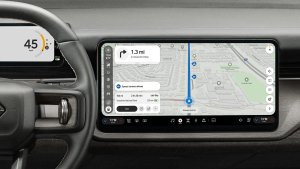
Rivian swapped Mapbox for Google Maps in July 2025 with update 2025.22. It used Google’s Automotive SDK to build its own navigation on top of Google’s routing, traffic and place data, while keeping Rivian features like range on arrival and charging stop planning.
The same Google-powered maps were also rolled out to the Rivian app, along with traffic incidents and the ability to send trips to the vehicle.
In September, update 2026.31 brought Waze alerts for police and speed cameras to R1 and R2 navigation, alongside RivianOS 2 for the R1. The same update added live trips to the app, which happens to be the screen Conner highlighted in his X post.
Rivian AI Agents Could Be Next
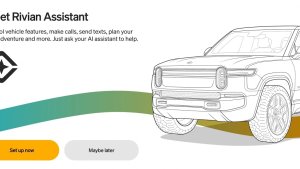
Maps aren’t the only area Rivian is pushing on. At TechCrunch Disrupt last week, CEO RJ Scaringe said Rivian’s vehicles will eventually be able to run AI agents from companies like Anthropic. Rivian Assistant already handles voice requests through Rivian’s own agentic framework, which decides whether to use a local model in the car or a larger one in the cloud.
The CEO was optimistic about the idea, stating that AI agents are “where it becomes magical.”
Navigation is an obvious place to start. The company has said owners will be able to use Rivian Assistant to label saved locations and plan trips with natural language. Rivian didn’t give a timeline, though the company pointed to its upcoming AI & Autonomy Day in December.
Tesla Is Taking a Different Route
Tesla, for its part, wants to move away from outside providers entirely. Tesla’s navigation currently relies on Google Maps data in most of the world, and Baidu in China.
During the Q3 2026 earnings call, a shareholder asked why Tesla still uses third-party maps, pointing to FSD’s issues with speed limits, parking and routing. Tesla VP of AI Ashok Elluswamy agreed, saying Tesla “shouldn’t be depending on external people’s maps.”
He also confirmed that Tesla is building its own AI-based maps and navigation that learn from both individual drivers and the wider fleet, with the first pieces arriving in FSD v15.
Some of the groundwork is already in owners’ cars. Tesla added Preferred Routes with its 2026 Summer Update, which prioritizes routes you’ve driven before. A recent FSD release added Arrival Options, where a reasoning model picks a default spot to pull up at your destination. Tesla has also rolled out Grok in its vehicles, so it already has an AI assistant in place.
The Next Step for Rivian’s Maps
Rivian will likely share more details about its new mapping features at its AI & Autonomy Day in December. With Google Maps, Waze alerts and live trips already in place, additional map features through Rivian Assistant could very well be next.
Follow Us on Google
Add Rivian Wave as a preferred source on Google to see more of our stories in Top Stories.
Add to Preferred Sources