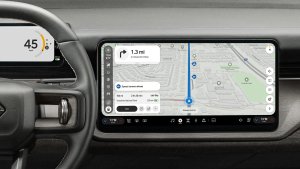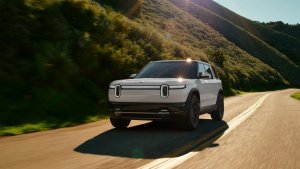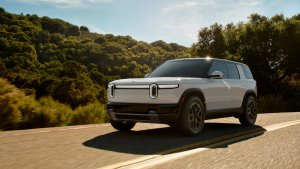
Rivian is issuing the largest safety campaign in its history, and for the first time, its newly launched mass-market crossover is on the list. The recall covers roughly 100,000 vehicles across North America, addressing a glitch that could block the rearview camera display when shifting into reverse.
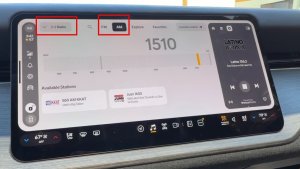
According to a recall filing submitted to the National Highway Traffic Safety Administration, the issue affects 98,828 vehicles, including 2022–2027 model year R1S SUVs, 2022–2026 R1T pickups, and the all-new 2027 R2 midsize SUV. Under certain conditions, an on-screen notification can pop up and obscure the back camera feed while reversing, falling out of compliance with Federal Motor Vehicle Safety Standard 111 and increasing the risk of a collision.
R2 Enters Its First Recall During Production Ramp
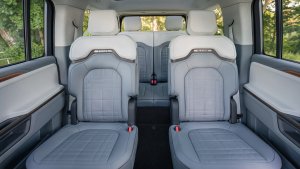
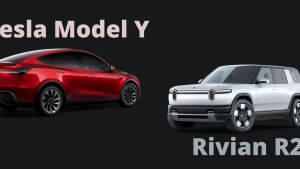
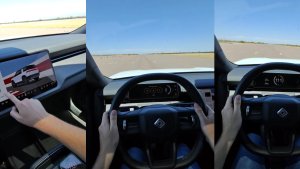
The campaign marks the very first formal recall involving the R2. Rivian kicked off customer deliveries of its Model Y competitor back in June, starting with the top-spec Performance Launch Package before lower-priced Premium and Standard trims arrive later this year and into 2027. Demand has been healthy right out of the gate, prompting Rivian to start a second production shift for the R2 at its flagship Illinois factory to meet order backlogs.

Fortunately for drivers, the rear camera glitch was caught during internal validation testing rather than on the road. Rivian confirmed it isn’t aware of any consumer complaints, collisions, injuries, or fatalities connected to the bug. Assembly lines began producing vehicles with patched code on August 10, preventing newly delivered customer cars from experiencing the issue.
The Software-Defined Advantage
While legacy automakers often require vehicle owners to schedule service appointments and leave their cars in the shop for hours, if not days, just to reflash an onboard module, modern software-forward companies like Rivian and Tesla have the advantage of handling these issues overnight.
Rivian deployed an over-the-air (OTA) software update that completely resolves the issue without charging owners a dime. In fact, filings confirm that more than 95% of all impacted vehicles have already downloaded and installed the patch automatically. Formal owner notification letters will still head out in November to fulfill standard federal recall procedure.
Seeing the word recall attached to nearly 100,000 units can easily sound alarming, especially when that accounts for more than half of Rivian’s total sales to date. However, resolving the problem through a quiet OTA update proves that modern vehicle architectures make owning an EV far less of a chore when bugs crop up.