Watch: Rivian R1Ts Power New Montana Ski Resort Shuttle

By Nehal Malik
Rivian Wave

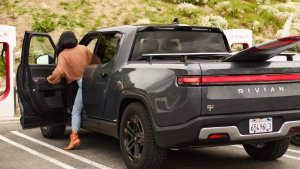
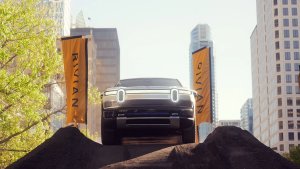
Skiers at Big Sky Resort in Montana are getting a high-tech lift to the slopes this season that does not involve a gondola. X user Kyle Conner (@itskyleconner) recently shared footage of a fleet of at least six Rivian R1T trucks being used as a specialized shuttle service at the resort.

"6 Rivian R1Ts pulling trailers to move people around Big Sky ski area. So cool!" Conner noted while capturing the electric trucks in action. The implementation is a clever way to solve a common mountain problem: getting people from free parking zones to the ski lifts without forcing them to hike up in heavy gear.

A Sustainable Mountain Shuttle

The setup involves the R1T trucks pulling large trailers or carts, each capable of seating more than a dozen people. According to Conner, the shuttle service runs daily from 8:30 a.m. to 6 p.m., effortlessly moving crowds across the ski zone.

It appears that Rivian may have provided both the trucks and the custom trailers to the resort for this specific pilot program. When the sun goes down and the slopes close, the fleet is parked at on-site Level 2 AC chargers to juice up for the next day. Seeing these silent, emission-free pickups replace noisy diesel shuttles is a major win for sustainable mobility in fragile mountain ecosystems.

Built for the Wild: R1T Specs

The R1T is practically overqualified for this job. The Gen 2 (2025–2026) model is a high-performance beast, with the Quad-Motor variant pushing a staggering 1,025 hp and 1,198 lb-ft of torque. It can hit 0–60 mph in just 2.5 seconds, and the Dual Max version offers a massive EPA-estimated range of 420 miles.

More importantly for a ski resort, the R1T features 14.9 inches of ground clearance and advanced off-road capabilities that make navigating icy, snowy roads a breeze. With a max towing capacity of 11,000 lbs, pulling a cart filled with skiers is light work for this truck. Safety is also a major factor, as the R1T is the only EV ever to achieve an IIHS Top Safety Pick+ rating in the pickup category.

The Future of the Brand

This mountain implementation comes at an exciting time for Rivian. While the R1T and R1S continue to prove their worth in extreme conditions, the company is finally nearing the launch of its long-awaited R2 midsize SUV.

The Big Sky implementation is pretty impressive. By putting their hardware into real-world, high-utility roles like this, Rivian is showing that electric trucks are not just for the suburbs — they are rugged enough to keep a world-class ski resort running smoothly and sustainably.

Rivian Announces Partnership with YouTuber Mark Rober's CrunchLabs

By Nehal Malik
Rivian Wave

Rivian is teaming up with one of the biggest names in science education to make electric vehicles a lot less mysterious for the next generation. The American automaker has announced an exclusive, "multi-phase partnership" with CrunchLabs, the STEM-focused company founded by former NASA engineer and YouTube star Mark Rober.

The collaboration aims to take a deep dive into the engineering that makes Rivian’s vehicles tick. Rober, who reaches over 500 million viewers monthly, will be creating original content that breaks down Rivian’s EV technology, manufacturing, and safety features in his signature high-energy, accessible style.

Engineering for the Next Generation

CrunchLabs has quickly become a household name for families through its subscription-based "Build Boxes" and "Creative Kits." These kits are designed for kids ages 6 to 13+ and encourage them to "think like engineers" by building hands-on projects. For older teens and adults, the company even offers "Hack Packs" that dive into coding and robotics.

By partnering with Rober, Rivian is essentially positioning itself as the "cool" brand for future engineers. Rivian Founder and CEO RJ Scaringe noted that the goal is to show off the creativity behind their products while inspiring young leaders. "As we prepare to introduce new vehicles like R2 we want to peel back the curtain on technology that makes these experiences possible," Scaringe said in the official press release.

Mark Rober echoed that sentiment, emphasizing that the partnership is about helping people see how high-level engineering improves their lives. "Rivian is building technology that deserves to be understood," Rober added.

What to Expect This Year

The partnership officially kicks off at SXSW in Austin on March 13. Scaringe and Rober will host a featured session at Rivian’s "Electric Roadhouse," which will include one of Rober’s famous live scientific demonstrations.

Beyond digital content and creator-produced videos, the collaboration will move into the real world this summer. Rivian plans to host nationwide, family-focused "activations" across its retail spaces. This could be a massive win for Rivian’s brand awareness, especially as it prepares for the highly anticipated launch of the R2 SUV.

A Brand Built on Feedback

Rivian has already shown that it values community input and "real-world" testing. For instance, the company recently revamped its 'Kneel Mode' in the recent 2026.03 update. Those changes were actually inspired by feedback from tech YouTuber Zack Nelson (JerryRigEverything) and his partner Cambry, highlighting how much Rivian pays attention to the tech community.

By making Rivian the "exclusive automotive partner" for CrunchLabs, the brand is securing a long-term connection with a massive, tech-savvy audience. It’s a smart move that turns complex electrical architecture into something a 10-year-old can be excited about — and potentially work on one day.

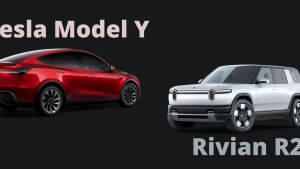
Buyer’s Guide: Rivian R2 vs Tesla Model Y

By Karan Singh
Rivian Wave

Since its launch, the Tesla Model Y has been the undisputed king of the midsize electric SUV segment - eventually becoming the best-selling car in the world. However, Rivian is finally aiming directly at Tesla’s crown. The upcoming 2026 Rivian R2 scales down the rugged, adventurous DNA of the R1 into a smaller, more affordable package designed for the mass market.

With Tesla having rolled out the refreshed Model Y last year and Rivian gearing up for R2 production, prospective buyers in the midsize SUV market are facing a difficult choice. Here is a definitive, spec-by-spec breakdown of how the highly anticipated R2 stacks up against the reigning champion.

Pricing & Trims

Price is the most important battleground for this segment. Tesla has heavily optimized its manufacturing process, and economies of scale work in its favor to let it offer an incredibly competitive starting price. 

Rivian is aiming to eventually match that accessibility, but the initial Launch Edition models will be pricier off the bat. The single-motor model, aimed at the $45,000 price point, is expected to follow sometime in 2027.

Both vehicles are manufactured in the United States for American buyers - the Model Y in Texas, and the R2 is slated for Illinois. That means both vehicles should qualify for any state-level incentives in place.

For Canadian buyers, the Model Y will be imported from Germany or China, depending on the variant. Due to the pricing of both vehicles, neither will fall into the bracket for the new Canadian ZEV rebate, but they should meet requirements for certain provincial rebates.

Variant

Rivian R2 (Estimated) (USD)

Tesla Model Y (2026) (USD)

Starting Price (Base)

~$45,000 (Single-Motor RWD)

$39,990 (Standard RWD)

Long Range Price

~$55,000 (Dual-Motor AWD)

$48,990 (Premium AWD)

Performance Price

~$60,000+ (Tri-Motor AWD)

$57,490 (Performance AWD)

Dimensions

While they compete in the same midsize SUV segment, the design philosophies between the R2 and Model Y are wildly different. The Model Y is essentially a raised hatchback heavily optimized for efficiency and performance, while the R2 is a traditional, boxy SUV focused on internal storage space.

Surprisingly, the R2 is actually three inches shorter in overall length than the Model Y, making it easier to parallel park and drive in urban areas - but it does come in three inches taller, giving it a bit more presence on the road.

Dimension

Rivian R2

Tesla Model Y

Length

185.6 inches

188.6 inches

Width (w/o mirrors)

75.0 inches

75.6 inches

Height

66.9 inches

64.0 inches

Ground Clearance

9.8 inches

6.6 inches

Wheelbase

115.6 inches

113.8 inches

Performance, Battery, & Range

With Rivian using structural battery packs on the R2 and Tesla intending to bring them back with a 4680-variant Model Y, as well as native NACS, the battery and charging experience seems extremely similar - especially since both vehicles do 10-80% in approximately 30 minutes.

The Model Y remains the king of efficiency, squeezing massive range out of its motors, while Rivian is bringing quite a bit of extra horsepower to the equation - a difference in design and intent.

Specification

Rivian R2 (Dual-Motor Launch Edition)

Tesla Model Y (Long Range AWD)

0–60 mph

3.6 seconds (Tri-motor expected <3.0s)

4.6 seconds (Performance: 3.3s)

Estimated Range

300+ miles

327 miles

Power Output

656 hp / 609 lb-ft

~425 hp / 475 lb-ft

Battery Tech

87.4 kWh (4695 Cells)

81 kWh (2170 Cells)

Charge Port

NACS

NACS

DC Fast Charging

10% to 80% in ~30 minutes

10% to 80% in ~27 minutes

With Rivian fully adopting NACS, it can charge at any V3 or V4 Supercharger site without an adapter, just like a Model Y. This is a big win for 3rd-party vehicles, as that means they don’t have to hope that unreliable third-party networks like Electrify America are functional and available.

Interior Features & Utility

This is where the user experience diverges the most, away from the exterior looks.

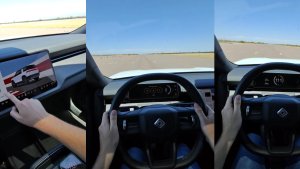
Tesla’s most recent refresh of the 2026 Model Y refined the minimalist cabin, bringing back turn signal stalks and adding acoustic glass, customizable ambient lighting, a new, larger QHD touchscreen, and an 8-inch rear screen for back-seat passengers. Most controls are through the screen, simply and easily accessible in 1-2 taps.

Rivian’s R2, on the other hand, takes a more narrow approach to minimalism - it retains a dedicated driver’s display alongside the central screen, along with massive haptic scroll wheels to allow drivers to flick through the menus without needing to touch the screen.

The R2 also brings a lot of big interior features to its internal space - including dual gloveboxes, extensive door-card space for storage, and a drop-down rear hatch glass. It also has fold-flat seats not just in the rear, but also in the front, if you want to get a level sleeping surface.

Storage Space

While both vehicles are mid-size SUVs, the R2 is definitely the winner in terms of available interior cargo capacity, both in the frunk and cargo space in the back.

Storage Metric

Rivian R2 (Estimated)

Tesla Model Y (5-Seat)

Front Trunk (Frunk)

~5.0+ cu ft

4.1 cu ft

Rear Cargo (Behind 2nd Row)

~33.0 cu ft

30.2 cu ft

Max Cargo (Seats Folded)

TBD (Expect 80+ cu ft)

76.2 cu ft

Under-Floor Sub-Trunk

~4.6 cu ft

2.7 cu ft

Seat Folding Capability

1st & 2nd Rows Fold Flat

2nd Row Folds Flat

On-Road Dynamics vs Off-Road Capability

The vehicle you choose heavily depends on where you want to drive.

The Model Y is strictly a street vehicle, with just 6.6 inches of stock ground clearance. It is designed for efficiency, cornering stability, and highway cruising. The new adaptive suspension is a vast improvement for rider comfort, making it a stellar commuter or road-tripper. If you choose the Model Y Performance, it is an even slimmer 6 inches, but with even tighter handling controls for track days.

The R2, on the other hand, leans heavily into the same off-road pedigree of the R1. It boasts a massive 9.8 inches of ground clearance, dedicated all-terrain drive modes, and a flat underbody designed to take a few hits. The R2 is designed to easily tackle forest trails, deep snow, and beach sand by giving up some aerodynamic efficiency on the highway and streets to ensure you can adventure in one vehicle.

Today’s Autonomy vs. Tomorrow’s Promise

On the autonomy front, there is only one real winner - Tesla. FSD today can get you from point A to point B without intervention in most average road conditions - evidenced by the recent coast-to-coast FSD trip that lasted nearly 13,000 miles without a single human takeover

FSD includes city streets, highways, rural roads, unmarked gravel paths, and everything in between - and is now exceptionally capable. With Unsupervised FSD potentially around the corner, it is a fantastic choice; however, it is now available only as a subscription.

Rivian, on the other hand, is forging its own path. Initial R2 deliveries will be capable of some level of autonomy, with today’s Driver+ highway assist available immediately. However, Rivian intends to introduce a forward-facing LiDAR into future R2 builds that will not be retrofittable, leaving us at an impasse as to what exactly their path to autonomy looks like.

RJ has committed Rivian to achieving L4 autonomy in the future, but with training, data, compute, and many other limitations, it could be years before they get anywhere close to today’s FSD performance.

The Verdict

The Tesla Model Y and the Rivian R2 are both compelling options in the extremely competitive mid-size SUV segment - especially as EVs. They both offer some of the best batteries, motors, and software you can get in a car today, and you can’t really go wrong selecting either one.

If you want to road trip and commute, the Model Y is the ideal option, especially with FSD being able to keep you safe and reduce your driving fatigue.

On the other hand, if adventure is in your blood, the R2 will likely speak to you - especially with the upcoming Treehouse Tent.

If you’re waiting to see which vehicle is right for you, go try out a Model Y today. Then, once the R2 launches, visit a Rivian Space and get a hands-on experience, and see which you like more.

We also covered the Model X and R1S in a similar Buyer’s Guide, if you’re interested to learn more about the bigger brothers of these two vehicles.

Latest Rivian Update