Rivian is laying down the groundwork to transform its in-car experience into a highly structured digital platform. Following the recent launch of the R2 order configurator, which invited reservation holders to spec out their upcoming vehicles, Rivian Chief Software Officer Wassym Bensaid took to Reddit for a live Ask Me Anything (AMA) session.
During the Q&A, a community member pressed the executive on whether Rivian would open up its closed system to third-party applications or keep it tightly restricted. Bensaid’s calculated response revealed that Rivian is actively planning a curated ecosystem driven by specialized software development kits (SDKs), paving the way for outside developers to build directly for the automaker's operating system.
A Curated App Ecosystem Explained
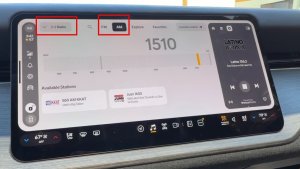
Instead of opening the gates to an unmonitored digital catalog with millions of apps, Rivian is taking a page out of Apple’s playbook by building a closed, template-based environment. The goal is to offload the burden of developing every single niche media application from Rivian's internal engineering team while maintaining absolute control over safety and aesthetic consistency.
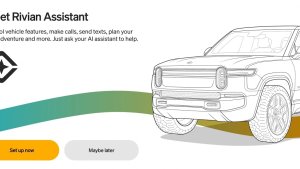
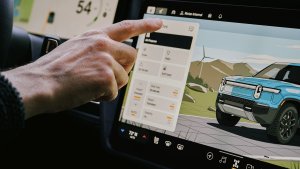
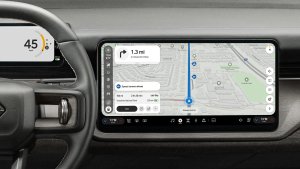
When explaining the company’s digital strategy on Reddit, Wassym Bensaid broke down the operational philosophy: "Our philosophy is centered on deep, intentional integration; we want everything on our screens to feel part of the Rivian end-to-end experience. While we aren’t planning an unrestricted app store, the long-term vision for our infotainment definitely includes structured developer frameworks, template-based SDKs, and AI agentic integration that seamlessly blends into the vehicle UI. This allows our partners to build tools that conform perfectly to our UI, safety, and security architecture, prioritizing a curated experience over sheer app volume."
By providing template-driven frameworks, companies like Spotify, Audible, YouTube Music, or smart-home providers will be able to design their own apps. However, they will be forced to adhere to strict layout guidelines, ensuring every service feels like a native app and operates with a uniform, cohesive look that won't distract drivers on the highway.
Powering RivianOS 2.0
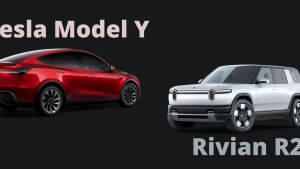
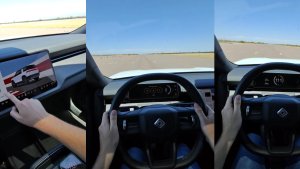
The timing of this announcement aligns with a massive hardware and software transition for the young EV brand. Rivian officially kicked off mass production of the R2 last month, and the midsize SUV arrives packed with upgraded infotainment processing and AI hardware.
This upgraded hardware suite will be the launchpad for RivianOS 2.0, which is scheduled to debut alongside the first R2 Performance Launch Package deliveries later this spring before rolling out to older R1 models over the summer. Once Rivian puts its plans for developer SDKs and an app distribution platform to work, we expect music and video streaming applications to dominate the initial curated catalog, giving owners a fluid entertainment suite that can take full advantage of the R2’s upgraded processing chops.
Scaling Through Global Partnerships
Enabling structured third-party app development carries financial implications far beyond Rivian's immediate fleet. This developer framework could eventually serve as a piece of Rivian’s multi-billion-dollar joint venture with Volkswagen.
Because Audi and other Volkswagen brands are slated to integrate Rivian's tech and architecture over the coming years, creating a scalable software template could allow cross-brand deployment of apps that run seamlessly across both a Rivian R2 and a future electric Audi. By prioritizing software-driven revenue and a curated distribution portal, Rivian aims to build a sustainable, premium digital ecosystem that respects vehicle safety while giving consumers the flexibility they crave.