The Rivian Commercial Van has gone by several names, including the Rivian Commercial Vehicle (RCV) and the Rivian Electric Delivery Vehicle (EDV). Now, Rivian seems to have finalized its naming strategy, officially branding it as the Rivian Commercial Van.
But the name change isn’t the biggest news—Rivian has officially opened early fleet orders for the 2025 RCV in two variants: the 500 Series and 700 Series. On February 5th, 2025, Rivian began inviting interested buyers to configure their fleet orders via email.
What is the RCV?
The Rivian Commercial Vehicle is an all-electric van designed for efficiently transporting goods over short to medium distances—all while ensuring cargo and fleet safety, security, and a touch of style. Best of all, as a modern EV, the RCV helps fleet owners reduce maintenance and fuel costs, making it a smart and sustainable choice for commercial operations.
The Purpose

The RCV is a purpose-built last-mile delivery van designed for efficiency and versatility. It features an automatic rear bulkhead door and an easily accessible curbside door, allowing for seamless deliveries whether streetside or at a loading dock. This flexibility enables businesses to streamline operations, potentially eliminating the need for a last-mile warehouse to transfer goods from larger vehicles to smaller ones.
Rivian offers the RCV in two variants: the RCV 500 and the RCV 700. The 500 is optimized for navigating city streets and tight urban environments, while the 700 provides expanded cargo space for businesses that require more capacity without compromising maneuverability in standard delivery routes.
Specs and Details
As previously mentioned, there are two specs to the RCV - the 500 and 700. The tables below provide all the key information you’ll need to understand what is offered with each vehicle. All information provided below is in imperial measurements first, while metric measurements are in parentheses.
Spec | RCV 500 | RCV 700 |
|---|---|---|
Length | 248.5” (6,311mm) | 278” (7,061mm) |
Max Width | 96.4” (2,449mm) | 103.5” (2629mm) |
Height | 114.7” (2914mm) | 114.8” (2917mm) |
Wheelbase | 157.5” (4000mm) | 187” (4,750mm) |
Ground Clearance | 6.7” (171mm) | 6.9” (175mm) |
Turning Circle | 46.9 ft (14.3m) | 53.9 ft (16.4m) |
Cargo Area - Volume | 487 cu. ft. (13.8m3) | 652 cu. ft. (18.5m3) |
Cargo Area Width x Length (Max) | 76.5” x 137.3” (1,943mm x 3487mm) | 83.6” x 166.8” (2,213mm x 4,237mm) |
Cargo Area - Height (Door Closed) | 82.6” (2,097mm) | 82.6” (2,097mm) |
Closures | Rear Door (Roll-Up) Curbside Door (Sliding Hinged Driver Door Powered Bulkhead Door | Rear Door (Roll-Up) Curbside Door (Sliding Hinged Driver Door Powered Bulkhead Door |
Charge Port Location (CCS) | Front-left corner | Front-left corner |
Curb Weight | 6,837lbs (3,101kg) | 7,242lbs (3,285kg) |
Gross Vehicle Weight Rating (GVWR) | 9,500lbs (4,309kg) | 9,500lbs (4,309kg) |
Payload | 2,663lbs (1,208kg) | 2,258lbs (1,024kg) |
Rivian is keeping things simple when it comes to drivetrain options for the RCV 500 and RCV 700—both models feature a single-motor, front-wheel-drive setup delivering 320 horsepower and 299 lb-ft of torque for a smooth yet capable drive.
Range figures are solid for urban and regional deliveries. The RCV 500 is rated at 161 miles (259 km) of range, while the larger RCV 700 comes in just slightly lower at 160 miles (256 km). As with most EPA estimates, real-world conditions—such as stop-and-go city traffic—may reduce range by 5-10%, though the impact is minimal for the van’s intended use.
Both models are powered by a 100 kWh LFP battery pack, supporting DC fast charging at 100 kW and AC charging at 11 kW. While these speeds aren’t groundbreaking, they’re well-suited for fleet operations, where vehicles can charge overnight and be ready to roll the next workday.
Amazon Contract

Rivian has been working closely with Amazon to develop purpose-built last-mile delivery vehicles, starting with the Rivian EDV. Amazon continues to deploy additional RCVs, a strong indicator that the vehicle has reduced operating costs when compared to traditional internal combustion engine (ICE) vans.
With RCV production ramping up, Rivian is now in a position to supply more commercial fleet customers beyond Amazon. This expansion allows Rivian to tap into a market traditionally dominated by legacy automakers like Ford and Dodge. As Rivian scales production, its commercial van business is shaping up to be a major and sustainable revenue stream.
HelloFresh Contract

Several RCVs have already been spotted in HelloFresh and Factor liveries, suggesting that Rivian and HelloFresh are collaborating to test the RCV for meal package deliveries.
The first sightings of these branded RCVs date back to late December 2024, with additional vehicles appearing across the U.S. in the weeks since. Interestingly, rather than featuring HelloFresh’s primary branding, many of the vans showcase the Factor and Chef’s Plate trademarks—both subsidiaries of HelloFresh—hinting at broader future deployments.
Camper Vans?

Rivian’s consumer lineup is all about adventure, and what better way to explore than in a fully electric camper van? Introducing the RCV Camper Van—a concept that could redefine off-grid travel.
While Rivian hasn’t yet announced single-vehicle sales of the RCV, we’re hoping that changes soon, giving customers the opportunity to build their dream electric adventure van.
Imagine a Rivian Adventure Van equipped with a built-in washroom, an electric kitchen, and all the essentials for extended off-grid living. Whether you’re setting out for a weekend getaway or a months-long road trip, an RCV Camper would be the ultimate fusion of sustainability, innovation, and adventure—perfectly aligning with Rivian’s brand.
Pricing & Options

Rivian has set the starting price for the RCV 500 at $79,900 and the RCV 700 at $83,900. However, the full list of available options and final pricing with additional features remains unclear. That said, the baseline models appear to be well-equipped.
It’s likely that Rivian will offer fleet-specific additions, such as interior shelving and custom fleet wraps, which could increase the cost. The company has confirmed that the interior shelving is removable, but it’s still uncertain whether this will be an optional add-on or a standard feature in every RCV.
ADAS Features
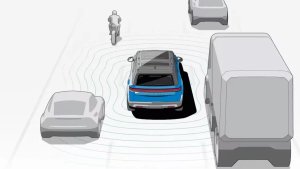
Rivian is equipping every RCV with Driver+ assistance features, including lane keep assist and adaptive cruise control for highways where Driver+ is available, along with Rivian’s full suite of safety features.
However, the company has not yet confirmed whether full Driver+ autonomy will be available on the RCV. That said, the vehicle’s camera and sensor setup appear similar to what’s found on the R1T and R1S, suggesting it may have the necessary hardware for advanced capabilities in the future.

RCV 900?
The RCV 900 was previously mentioned during Rivian’s early development of its electric commercial van, but it hasn’t been seen or referenced in several years. While Rivian could revive the model, it seems unlikely at this stage.
If the RCV 900 were to return, it would likely feature a longer length and wheelbase, offering increased storage capacity but potentially less range.
For now, we don’t expect to see the RCV 900 make a comeback—but since it once existed on paper, there’s always a chance it could reemerge in the future.
Release Date
Rivian has announced that deliveries will begin in April for its early access fleet customers, with public orders opening soon after.
However, it’s unclear whether public orders will be limited to fleet buyers or if individual customers will also have the opportunity to purchase. The versatility of the RCV opens the door to countless creative uses—whether as a food truck, camper van, or even a mobile stargazing platform—and we’re sure enthusiasts are already dreaming up even more possibilities.
Given Rivian’s focus on commercial customers, we expect fleet orders to take priority, with individual orders rolling out gradually as production scales and supply chains stabilize.
Have a unique vision for the RCV? Share your ideas with us on social media.
Follow Us on Google
Add Rivian Wave as a preferred source on Google to see more of our stories in Top Stories.
Add to Preferred Sources