When Rivian originally announced its multi-billion-dollar joint venture with Volkswagen, the market primarily viewed it as a financial lifeline. It was seen as a cash injection to bridge the gap to R2 mass production. However, recent developments indicate that the joint venture has been evolving into a lucrative, software-centric relationship.
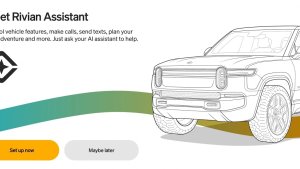
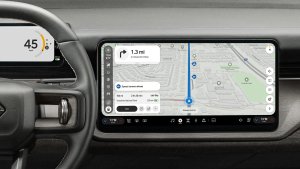
Speaking on The Verge's Decoder podcast, Rivian’s Chief Software Officer Wassym Bensaid revealed that while the Rivian Assistant is not currently part of the active VW deal, active discussions are happening to integrate the proprietary AI platform into the partnership. If finalized, this expansion would transform Rivian's revenue architecture from one-time IP sharing to a recurring, high-margin licensing model.
New Wassym interview: Rivian Assistant isn't part of the VW JV today, but discussions are happening to add it
— Rivian DD (@Rivian_DD) May 28, 2026
Unlike the existing deal, this would generate recurring licensing revenue that grows with VW's fleet
This comes days after Rivian listed an Associate General Counsel… pic.twitter.com/4eA70lk3L7
Fleet-Scale Licensing
The existing joint venture structure focuses heavily on shared architecture, pooling hardware designs and foundational zonal software to help Volkswagen modernize its upcoming electric fleet. While valuable, that model carries fixed caps on initial returns. Incorporating the Rivian Assistant and other software features changes the math entirely.
A modern vehicle assistant relies on continuous cloud processing, machine learning updates, and user interaction. Because of this operational dependency, Bensaid noted that expanding the JV to include the Assistant would generate recurring licensing revenue.
Instead of a flat fee for technology access, Rivian would capture a continuous, predictable revenue stream that grows dynamically with every single software-equipped vehicle Volkswagen sells globally. Given VW's massive global manufacturing scale, even a modest per-vehicle monthly licensing fee would yield significant revenue for Rivian.
Pushing the Framework for Expansion
While Bensaid’s podcast comments offer a look at Rivian's strategic ambitions, Rivian’s hiring suggests that the legal framework for this expansion is already being drafted. Just days prior to the interview, Rivian posted a job listing for an Associate General Counsel.
The responsibilities for the role are very specific, tasking the incoming executive with "expanding the scope of our joint venture with VW." Crucially, the listing notes that this individual will be responsible for delivering "first-of-their-kind revenue-generating IP cross-licenses and strategies."
Rivian is actively building out the legal infrastructure required to monetize its intellectual property beyond the original contract.
Beyond the Hardware Moat
This software-first strategy defines a maturity phase for Rivian. Hardware manufacturing is notoriously capital-intensive, carrying thin margins and massive operational risks during production ramps.
If successful, integrating the Rivian Assistant into the VW fleet will demonstrate that Rivian's value proposition lies not only in hardware but also in its prowess as an enterprise software powerhouse.
Follow Us on Google
Add Rivian Wave as a preferred source on Google to see more of our stories in Top Stories.
Add to Preferred Sources