The promise of bi-directional power flow has long been the next frontier of electric vehicle ownership. By transforming a parked vehicle into a massive stationary battery, owners power their homes during prolonged power grid outages.
A new patent application from Rivian reveals exactly how the automaker intends to solve these specific hardware bottlenecks. Titled "Systems and Methods for Providing an Electronics Housing with Wireless Coverage in Opposite Directions," (US 2026/0112919), the document outlines a bi-directional wall charger.
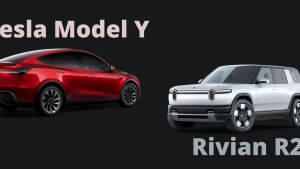
While Rivian hasn’t implemented vehicle-to-home (V2H) on R1 vehicles, the R2 is expected to finally bring expanded V2H capabilities to the lineup.
Solving for Heat
Transferring large amounts of direct current (DC) from a vehicle and converting it to alternating current (AC) for a home generates substantial thermal energy. To prevent system failure, conventional bi-directional chargers often rely on bulky external heat sinks.
Rivian circumvents this issue by utilizing the housing as a dual-purpose structural chassis and integrated cooling system. The heavy-duty enclosure features specialized heat-dissipating sections with cooling fins directly cast or machined into the housing exterior.
High-heat generators, such as internal transistors, are mounted to interior surfaces that correspond with taller, higher-volume cooling fins on the exterior.
Conversely, components that generate less heat, such as the direct current magnetics, correspond to sections with shorter cooling fins. By optimizing the thermal pathways and utilizing the structural housing itself to sink heat, Rivian effectively eliminates the need for intermediate thermal management hardware, thereby reducing the overall complexity, size, weight, and manufacturing cost of the unit.
Solving for Repairability
Rivian is also trying to make repairs easy and more cost-effective by separating the charger’s high-voltage hardware from the lower-voltage communication and control components. The main power components are sealed behind a tamper-resistant cover and aren’t meant to be serviced on-site.

The parts most likely to need maintenance are instead placed in a separate front service compartment. That area includes components such as the control board, fuses, and wireless antennas, all of which can be accessed with basic tools like a Phillips screwdriver or a hex key. That makes it much easier for technicians to swap parts without removing the entire charger from the wall.
The overall design is clearly focused on making repairs simpler and cheaper. If a component like a fuse or communication board fails, the entire charger doesn’t need to be replaced. It also shows Rivian is thinking beyond just the vehicle itself and building out a more practical long-term home energy system.
While the Rivian R2 already supports vehicle-to-load (V2L) with the field outlet accessory, we’re hopefully it’ll also be the first Rivian to support true V2H capabilities.